24/7 call-out
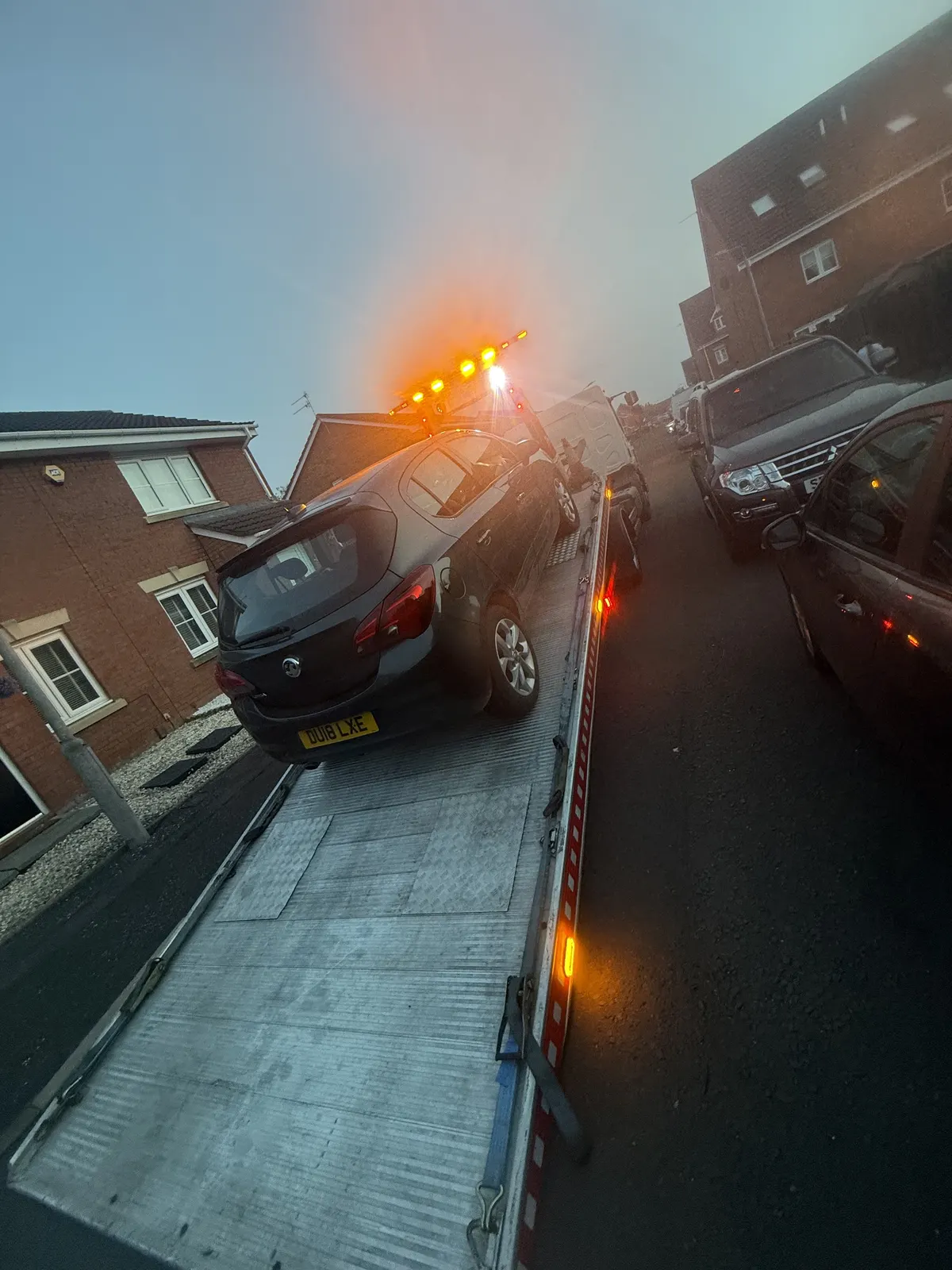
Night-time support for a stranded vehicle.
Urgent help for breakdowns, accidents and vehicles that cannot be driven safely.
Once your booking is confirmed, we dispatch promptly and aim to reach most Glasgow call-outs in around 25–30 minutes.
Estimated arrival times depend on traffic, weather, distance, access and current workload.
24/7 emergency vehicle recovery across Glasgow with rapid dispatch for breakdowns, accidents, non-runners and unsafe vehicles.
Send the vehicle make, model, registration, condition, exact pickup location, destination and clear photos. For police compounds or auctions, include the collection reference and appointment details.
After confirmation, we dispatch promptly and aim to reach most Glasgow call-outs in around 25–30 minutes. Arrival times remain estimates and depend on traffic, weather, distance, access and current workload.
Night-time support for a stranded vehicle.
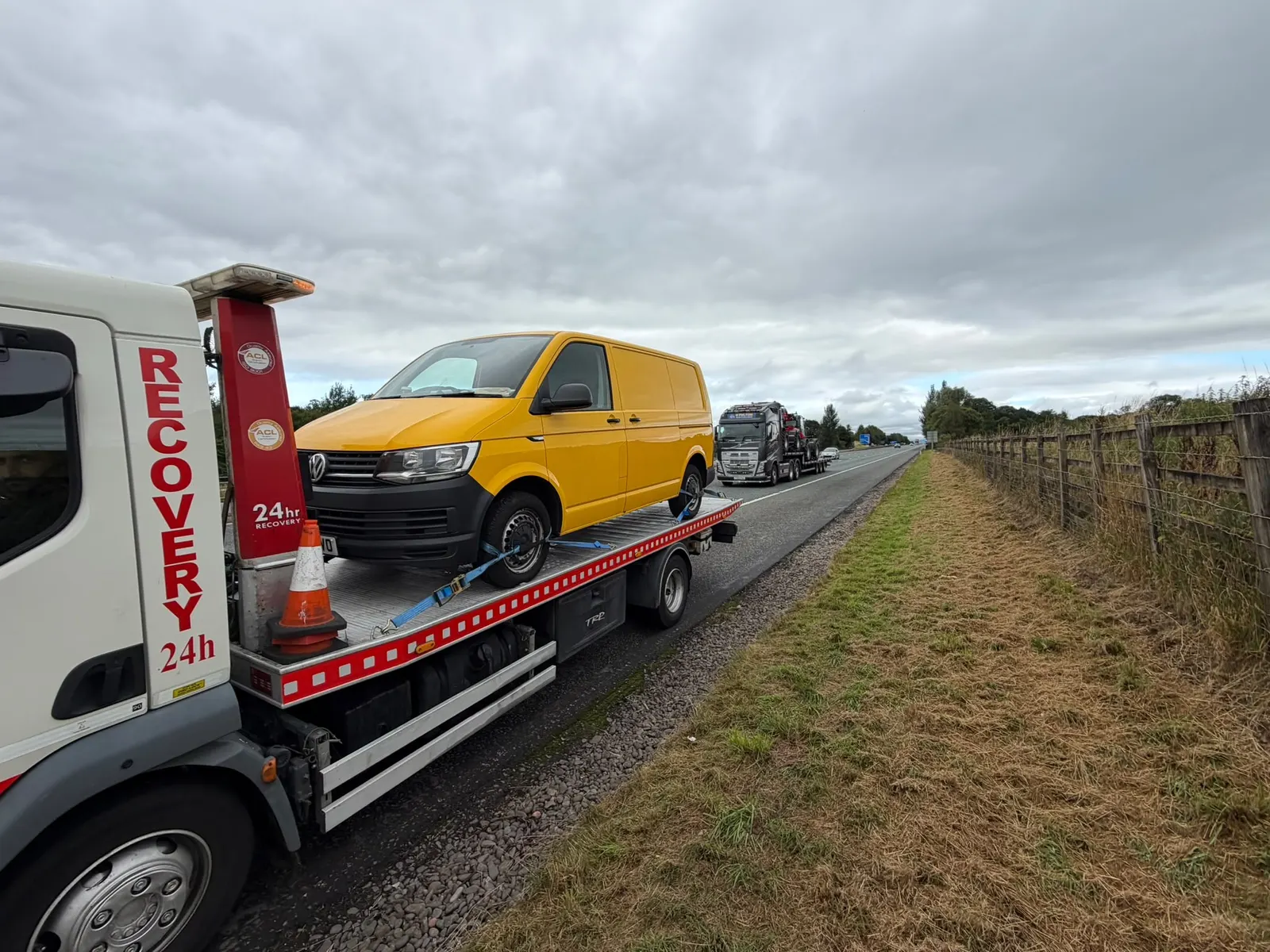
Roadside van recovery and transport.
Urgent recovery is not simply a faster version of planned transport. The first priorities are personal safety, an exact location and an honest description of the vehicle condition. A collision, a vehicle stopped in a dangerous position or a complete mechanical failure can all change the equipment, access and loading plan required.
If the vehicle is exposed to moving traffic or creates an immediate hazard, follow official road-safety guidance and contact the emergency services where appropriate. Recovery should be arranged only once the situation is safe enough for attendance. Never remain in a live lane to take photos or gather details for a quote.
After an impact, steering, suspension, wheels, tyres, body panels or fluid systems may be damaged even if the vehicle still starts. Tell us what is visibly damaged and whether the wheels are straight and free to rotate. Photos from a safe position can prevent the wrong loading assumptions.
In darkness, rain or poor visibility, accurate location information becomes even more important. Send a map pin, road number, direction and nearby junction or landmark. If the vehicle is in an unlit or exposed place, prioritise your own safety rather than standing beside it.
On the M8, M74, M77, M80 or M73, give the direction of travel, nearest junction, slip road or emergency refuge information when known. Do not walk along a live motorway to find a marker purely for the recovery operator.
A vehicle with collapsed suspension, a displaced wheel, seized drivetrain or locked steering needs more than a standard “non-runner” description. Tell us which corner is affected and whether there is clear space around the vehicle for recovery equipment.
If the vehicle needs to go to a police compound, bodyshop, garage, home address or storage point, confirm that destination and whether it can receive the vehicle at the expected time. An urgent pickup still needs a workable delivery plan.
Road names help us understand the likely access, direction of travel and onward route, but the exact pickup pin or postcode is still required for a live quote. These corridors connect Glasgow with the wider Scotland coverage network.
High-traffic urban motorway through Glasgow where exact direction and junction information are particularly useful.
South/east Glasgow motorway corridor with major junctions toward Lanarkshire and the A74(M).
Southbound corridor toward East Renfrewshire, Kilmarnock and Ayrshire.
Connections toward Cumbernauld, Stirling and the wider Central Belt motorway network.
Major urban and regional roads where precise landmarks, direction and safe stopping position help recovery planning.
Coverage note: Lifesaver Vehicle Recovery is based in Glasgow. Wider area and road pages describe genuine service coverage, not additional physical depots or offices. Attendance is subject to live truck availability, vehicle suitability, traffic, road conditions and safe access.
An urgent call can still fail if the pickup point is unsafe for a recovery truck to stop and load. Tell us whether the vehicle is in a live lane, hard shoulder, refuge area, lay-by, car park or side street. If police or road authorities are controlling the scene, their instructions take priority and may determine when access becomes possible.
A vehicle that starts after an impact may still be unsafe to move if a wheel, tyre, steering component or suspension part is damaged. Describe what changed immediately after the incident and what the vehicle can do now. That is more useful than simply saying it was “in an accident” or “won’t move”.
Emergency pickup is only half the job. A closed garage, locked compound or unavailable contact can leave nowhere suitable to deliver a damaged vehicle. Confirm the destination, opening hours and receiving contact whenever possible so the transport plan is complete before the vehicle is loaded.
Examples include a vehicle that cannot be driven safely after a breakdown or collision, a vehicle stranded in a hazardous position, or an urgent non-runner that needs safe transport. Immediate danger should be reported to the emergency services first.
Lifesaver advertises 24/7 recovery. Actual attendance and ETA depend on live truck availability, traffic, road conditions, vehicle size and safe access.
Send a GPS pin or live map location, plus any visible road number, junction, landmark or direction of travel. This is usually more accurate than a broad area name.
It can be assessed, but steering, wheel and suspension damage must be declared before dispatch because the loading method and required working space may differ.
Follow official motorway and emergency guidance for your situation. Personal safety takes priority over waiting beside the vehicle or gathering information for the recovery operator.
You can request your preferred destination, subject to safe access and the garage or site being able to receive the vehicle.